
Where to Put a Wedding Guest Book QR Code and What to Say

Updated: Jul 3

A guest notices the QR code on their reception table. They glance at it, finish their conversation, and turn their attention back to dinner.
They may have seen the sign, but they still don’t know what you want them to do, whether it will take five seconds or five minutes, or what will happen after they scan it.
A wedding guest book QR code works best when it answers those questions before guests have time to lose interest.
The location matters, but placement alone won’t collect the photos, videos, and messages you’re hoping to receive. Guests also need a specific reason to contribute, a convenient moment to do it, and an upload process that doesn’t interrupt the celebration.
The best place for a wedding QR code is where guests have both a reason to contribute and enough time to do it.
Here’s how to create that opportunity throughout the wedding.
What should your wedding QR code collect?
Before printing signs or choosing where to display the code, decide what you want guests to share.
A broad request can work when your main goal is collecting candid photos and videos from throughout the day. Guests can upload the moments they happen to capture, including parts of the celebration the couple may never have seen.
A more specific prompt helps when you want personal contributions rather than a second camera roll full of dance-floor clips.
You could ask guests to:
Upload their favourite photo from the wedding
Record a short message for the couple
Share a favourite memory
Offer one piece of marriage advice
Capture a moment the couple may have missed
Record a message for the couple to watch on their first anniversary
Share a photo or video featuring people from their table
You don’t need to use the same request everywhere.
A QR code near the photo booth could ask guests to upload their best photo. A card at the dinner table could invite them to share a memory or record a message. A post-wedding text could ask for anything still sitting on their phones.
The request becomes easier to answer when it fits what guests are already doing.
For the full setup process, see our guide on how to make a digital wedding guest book.
Give guests a reason to scan
A QR code on its own doesn’t explain very much.
Guests may assume it opens the menu, the seating chart, the couple’s registry, or a website they’ve already visited. Some may also hesitate because QR-code scams have made people more cautious about opening unfamiliar links.
Every code should be paired with a short instruction that tells guests exactly what they’ll find.
Instead of:
Scan here
Try:
Scan to share your wedding photos and videos
Or:
Leave a video message for the newlyweds
Or even better:
Help us capture the moments we missed
The wording should focus on one clear action. Guests shouldn’t have to read a paragraph beside the code before deciding whether to use it.
It also helps to mention that the contribution page is private and doesn’t require an app.
With a VidDay Digital Guestbook, guests can open the private upload page in their browser and contribute from their phone. They don’t need to download anything or create an account.
That reassurance can remove two common reasons people decide to contribute later and then forget.
Where to place your wedding guest book QR code
A QR code should appear where people naturally pause, sit, take photos, or wait.
Relying on one sign near the entrance is risky. Guests arriving at a wedding are greeting friends, checking the seating chart, finding the coat room, and working out where they’re supposed to go next. Uploading a photo or recording a message is rarely their first priority.
Use several placements, but give each one a purpose.
Reception tables
Reception tables are one of the strongest places for a wedding guest book QR code because guests spend a long stretch of time seated there.
Place the code on a small table card, menu, or tent card where it can be scanned without being passed around.
Dinner tables work well for prompts that take a little thought:
Share your favourite memory of the couple
Leave one piece of marriage advice
Record a short message before the dancing begins
Upload the best photo from your table
A card on every table is more useful than one large sign across the room. Guests can scan it when the conversation slows, dinner is being served, or someone at the table reminds everyone else.
Photo booth or photo area
Guests near a photo booth already have their phones out and are thinking about pictures.
That makes the request easy to understand:
Upload your favourite photo from tonight
You could also ask guests to record a short clip after taking their booth photos. Just make sure there’s enough space for them to step aside without blocking the line.
Bar or lounge area
The bar and lounge area can work because guests often have a moment to wait.
Use a simple request that doesn’t require much preparation:
Share a candid photo from the celebration
Avoid placing the code where people would have to hold up a busy line or lean over someone else to scan it. Nearby cocktail tables, ledges, or lounge seating are usually more practical than attaching it directly to the bar.
Guest book or gift table
A traditional guest-book table is a natural place to introduce the digital option.
Guests already understand that this area is for leaving something for the couple. A small sign can explain that they can add photos, videos, or recorded messages alongside a handwritten note.
This placement works especially well when the couple is using both a physical and digital guest book.
The physical book preserves signatures and handwriting. The digital guest book collects voices, expressions, photos, and contributions from people who couldn’t attend.
If you’re still deciding between formats, compare digital and traditional wedding guest books to see which one fits what you want to save from the day.
Wedding program or menu
Adding the QR code to the wedding program or reception menu keeps it within reach for much of the event.
The program can introduce the guest book early without asking people to contribute during the ceremony.
Use wording that makes the timing clear:
Take photos today and upload your favourites during the reception
This avoids encouraging phones during parts of the wedding when the couple would rather have guests watching the ceremony.
Near the dance floor
A QR code near the dance floor can help collect candid clips later in the evening.
The prompt should match that energy:
Capture a dance, reaction, or moment we may have missed
Place the sign slightly away from the speakers and busiest part of the floor. Guests may upload a clip there, but it won’t be a good place to record a thoughtful video message unless they’re hoping to preserve several minutes of bass and someone shouting for Aunt Linda.
The wedding website
The wedding guest book doesn’t need to begin at the venue.
Add the private link to the wedding website so close family, members of the wedding party, and guests who can’t attend can contribute ahead of time.
Early contributions can also make the guest book feel established before the wedding. The couple won’t be relying entirely on people remembering to upload while dinner, speeches, photos, and dancing compete for their attention.
Match the prompt to the moment
Guests are more likely to respond when the wording fits their surroundings.
A single generic message such as “Share something for the couple” asks them to decide what kind of contribution to make before they can begin making it.
Specific prompts remove that extra decision.
Use prompts like these throughout the wedding:
At the reception table
Share a favourite memory of the couple
Near the photo booth
Upload your favourite photo from tonight
Near the dance floor
Capture a moment the couple may have missed
At the guest-book table
Leave a video message for the newlyweds
On the wedding website
Record a message even if you can’t join us in person
In the post-wedding follow-up
Add your favourite photos and videos by Sunday
A prompt doesn’t limit what guests can contribute. It simply gives them somewhere to begin.
Make the QR code easy to scan
The code itself needs to work in the actual venue, not only on the laptop where the sign was designed.
Before printing everything, test the complete experience.
Use a simple, high-contrast design
Place the QR code on a plain background with enough empty space around it. Busy floral patterns, textured artwork, and low-contrast colours can make it harder for a phone camera to recognize.
Avoid glossy finishes when venue lighting could create glare across the code. Matte paper or cardstock is usually safer.
Print it at a useful size
A tiny code may look tidy on a table card but become frustrating when guests have to hover their phones a few inches away.
Print a test copy at the final size and scan it from the position where a guest would realistically sit or stand.
If the code will appear on a large welcome sign, test it from several feet away. If it will sit on a dinner table, test it from a seated position.
Add a written link
Include a short web address beneath the QR code when possible.
This gives cautious guests a way to see where the code leads and provides a backup for anyone whose camera struggles to scan it.
Test the venue connection
A code can scan perfectly and still fail if the page takes too long to load.
Check the cellular and Wi-Fi connection in the reception area, especially in older buildings, rural venues, basements, and rooms with thick walls.
Complete a real test upload from the venue if you can. Opening the page isn’t enough. Upload a photo or short clip and make sure the entire process works.
Use people, not only signs
Weddings are visually busy. Even a well-designed sign can disappear among flowers, menus, table numbers, candles, place cards, and everything else arranged around it.
A short announcement gives the QR code context.
Ask the DJ, MC, planner, or someone in the wedding party to mention it when guests can act on the request. The beginning of dinner, the end of the speeches, or the transition into dancing can work well.
The announcement could say:
We’d love to see the wedding from your perspective. Scan the QR code on your table to upload the photos and videos you take tonight. You can also leave the couple a short video message, and there’s no app required.
One clear reminder is useful. Repeating it every twenty minutes will make the guest book feel like a workplace compliance exercise.
You can also ask a few comfortable, tech-savvy friends or members of the wedding party to help their tables. A quick demonstration can help relatives who want to participate but aren’t confident using a QR code.
Keep collecting after the wedding
Some of the best contributions won’t arrive during the reception.
Guests may take dozens of photos and forget to upload them. Others may want to record a message somewhere quieter. People who couldn’t attend may not realize they can still take part.
Send the same private link after the wedding and include a clear deadline.
For example:
Did you take photos or videos at our wedding? Add your favourites through our private link by Sunday so we can include them in our wedding guest book video.
The deadline matters. Without one, the message can remain in a group chat while everyone returns to work, travel, laundry, and the other cruel interruptions of ordinary life.
You can share the link through:
A thank-you email
A group text
The wedding website
A message from the wedding party
A private social group
A follow-up note to guests who couldn’t attend
Keeping the collection open for a few days gives people another chance without allowing the project to drift indefinitely.
Wedding QR code mistakes to avoid
A few small problems can sharply reduce participation.
Avoid:
Displaying the code only at the venue entrance
Using wording that doesn’t explain what guests should share
Making the code too small
Printing it over a busy or reflective background
Requiring guests to download an app
Asking contributors to create an account
Forgetting to test the upload process at the venue
Assuming signs will replace a verbal reminder
Waiting too long to request post-wedding uploads
Asking for recorded messages only in loud areas
Each of these adds confusion, inconvenience, or bad timing.
The upload should feel like a natural part of the wedding, not another task guests need to complete correctly.
How to create a wedding guest book QR code with VidDay
VidDay gives you one private event page where guests can upload wedding photos, video clips, and recorded messages.
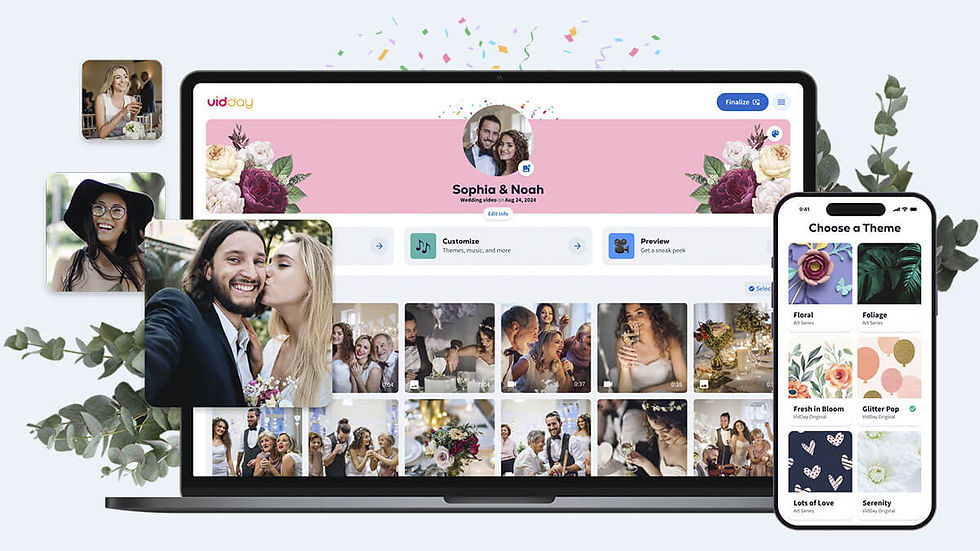
After creating your Digital Guestbook, you’ll receive a unique QR code and print-ready designs that can be displayed throughout the venue.
Guests scan the code with their phone camera, open the contribution page in their browser, and upload without downloading an app or creating an account.
Once everything has been collected, you can arrange the contributions into a wedding guest book video with music and a wedding theme. The finished video can be downloaded, shared privately, or added to a physical keepsake such as a Video Book, USB, or DVD.
Make the QR code part of the wedding
A wedding guest book QR code is easy to create. The more important work is deciding how guests will encounter it.
Give them a specific reason to scan. Place it where they have time to contribute. Remove unnecessary steps, mention it during the reception, and send the link again after the wedding.
That approach collects more than whatever happens to be uploaded from the first table that notices the sign.
It gives guests several natural opportunities to share the wedding from where they were standing, who they were sitting with, and what they saw while the couple was busy living the day.
For ideas on arranging those contributions, see our wedding video gift guide.


